Throughout the past couple of weeks, we've had a particularly narrow focus on sustainability in my design classes. Needless to say, it is one of the most pressing issues we as designers face these days. Whether you believe it or not, climate change is directly affected by our decisions in day-to-day life and especially in the environments in which we live. As an interior designer, I think we can have a direct effect on moving towards a more sustainable way of life through the spaces we inhabit.
While we typically look at sustainability through the lens of conserving energy and not wasting resources, there are other ways to move towards sustainability. My interior design class recently went on two trips - one to EcoVillage at Ithaca, NY and one to two of Frank Lloyd Wright's quintessential homes. In both instances, we were asked to consider the idea of sustainability at all levels.
EcoVillage took the idea of sustainability to an extreme (and not necessarily in a bad way). Currently, two "villages" exist there, with each village housing about 30 people who share a common house for laundry, community gatherings, etc. The villages featured small building footprints to conserve land, large south-facing windows to utilize passive solar heating, as well as many other innovative eco-friendly technologies. What's even more interesting is how they set up a sustainable
community. Thinking about spatial arrangements in a way that promotes social interactions was something I'd never thought of in that context. Any changes to the village have to be approved by ALL of it's residents, strictly following the idea of co-housing.
On the opposite end of the spectrum, Frank Lloyd Wright's Kentuck Knob and Falling Water did not necessarily consider sustainability yet managed to display some characteristics of it. Most prominently, Wright's unintended sustainability is displayed in his use of natural materials - especially those sourced from directly around the site. Stone quarried from each home's location as well as timber from locally grown trees, although made as aesthetic decisions, ultimately ended in an eco-friendly place.
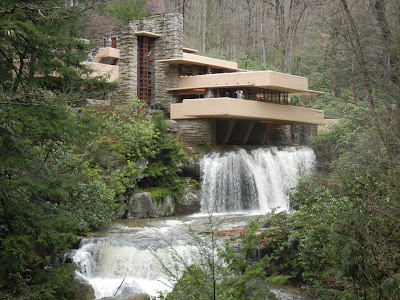
Shifting towards these aesthetics, Wright utilized a form of biophilia in both Kentuck Knob and Falling Water. He constantly referenced organic materials and forms. This is unmatched in his cascading cantilevers of Falling Water as well as his direct connection to the waterfall. On top of these links to nature, I found Wright's use of space impeccable. While his communal spaces were largely open, he managed to maximize every inch of space. His built-ins create a sustainable space not only because they utilized every inch, but also because they created a timeless and permanent environment to live in. Considering designs in the long-haul is something I consider pivotal to sustainable design. While we tend to focus on new technologies and contemporary images of interiors, I think a key element of sustainability will, in fact, be creating classic spaces that won't "ugly out" before they wear out.


.JPG)


